The bowl was licked clean before anyone even reached for seconds. Twice in one week, actually. Friends were texting me for the recipe, and honestly, I was a little surprised at how quickly this Healthy Calorie Deficit Greek Salmon Bowl with Tzatziki and Quinoa became the star of my meal rotation. It started as a simple attempt to enjoy dinner without the usual calorie guilt, but it turned into something that folks kept asking me to make again.
The smell of grilled salmon mingling with fresh herbs and zesty lemon filled the kitchen, drawing everyone to the table. That creamy, cool tzatziki sauce on top was just the right touch — not too heavy, but packed with flavor. The quinoa added a nutty, satisfying bite that balanced the dish perfectly. What made this recipe stick with me wasn’t just the flavors but how it managed to feel indulgent and nourishing at the same time.
It’s quietly satisfying, the kind of meal that doesn’t scream “diet food” but delivers on that promise. I realized this bowl wasn’t just about weight loss or calorie deficit; it became my go-to for when I want something wholesome, tasty, and fuss-free. I trust that you’ll find the same calm confidence in this recipe, one that lets you enjoy good food without second-guessing.
Why You’ll Love This Recipe
After testing this recipe multiple times (and sharing it with friends who kept requesting it), a few things stood out that make the Healthy Calorie Deficit Greek Salmon Bowl with Tzatziki and Quinoa a keeper:
- Quick & Easy: Ready in under 30 minutes, this bowl fits perfectly into busy weeknights or any time you want a fast but satisfying meal.
- Simple Ingredients: You won’t need to hunt down obscure items. Most ingredients are pantry staples or easy to find in any grocery store.
- Perfect for Weight Loss: Balanced macros and a calorie-conscious approach make this a solid choice when you want to eat smart without feeling deprived.
- Crowd-Pleaser: Everyone from picky eaters to health nuts seems to enjoy this one — the kind of recipe you can bring to potlucks or casual dinners without stress.
- Unbelievably Delicious: The combination of tender salmon, tangy tzatziki, and fluffy quinoa lands this bowl firmly in comfort food territory — just healthier.
This isn’t your average salmon bowl either. The tzatziki is made fresh with a hint of garlic and dill, giving it a brightness that feels authentic, not store-bought. The quinoa is cooked just right — fluffy but with a slight bite — and the salmon seasoning is just enough to make every bite pop without overpowering the natural flavors.
Honestly, this recipe stuck with me because it manages to be both nourishing and exciting. It’s not just a meal; it’s a small, quiet celebration on a plate that fits perfectly into a calorie deficit lifestyle.
What Ingredients You Will Need
This recipe uses simple, wholesome ingredients to deliver bold flavor and satisfying texture without the fuss. Most are pantry staples or everyday fresh items, so you won’t need a special trip to a fancy market.
- Salmon Fillets: Skin-on or skinless, about 6 ounces (170g) per serving. I prefer wild-caught for flavor, but farmed works fine.
- Quinoa: 1 cup (170g) uncooked, rinsed well to remove bitterness. Tri-color quinoa adds a nice look but plain white quinoa is fine.
- Greek Yogurt: ½ cup (120g), full-fat or low-fat for creamy tzatziki. I often use Fage brand for its thick texture.
- Cucumber: ½ medium, finely diced or grated for the tzatziki. Seeded cucumber keeps the sauce from getting watery.
- Fresh Dill: 2 tablespoons, chopped. Fresh herbs make a big difference here.
- Garlic: 1 clove, minced. Adds just the right kick to the tzatziki.
- Lemon: Juice and zest of 1 lemon for brightness in both the salmon marinade and tzatziki.
- Olive Oil: 2 tablespoons for cooking the salmon and dressing the quinoa.
- Kalamata Olives: ¼ cup, pitted and sliced (optional but adds a lovely salty note).
- Cherry Tomatoes: 1 cup halved, for freshness and color.
- Red Onion: ¼ cup thinly sliced, optional but adds nice crunch and sharpness.
- Salt & Pepper: To taste. Don’t be shy here — seasoning makes or breaks this dish.
For a gluten-free version, quinoa is naturally safe, and using fresh ingredients keeps this bowl clean and allergen-friendly. If you want to swap Greek yogurt for a dairy-free option, coconut or almond-based yogurts work well, though the flavor will shift slightly.
Equipment Needed
- Medium Saucepan: For cooking quinoa. A non-stick or heavy-bottomed pan helps avoid sticking and burning.
- Mixing Bowl: To combine tzatziki ingredients and toss the salad components.
- Non-Stick Skillet or Grill Pan: For cooking the salmon evenly without sticking. I’ve had good results with a cast iron skillet too.
- Microplane or Grater: To zest lemon and grate cucumber finely for the tzatziki.
- Sharp Knife: For chopping herbs, slicing veggies, and prepping salmon.
- Measuring Cups and Spoons: To keep ingredient amounts consistent.
If you don’t have a grill pan, a regular skillet works perfectly fine. Just keep an eye on heat to avoid overcooking. For zesting, if a microplane isn’t handy, a fine grater or even a vegetable peeler can do the job.
Preparation Method
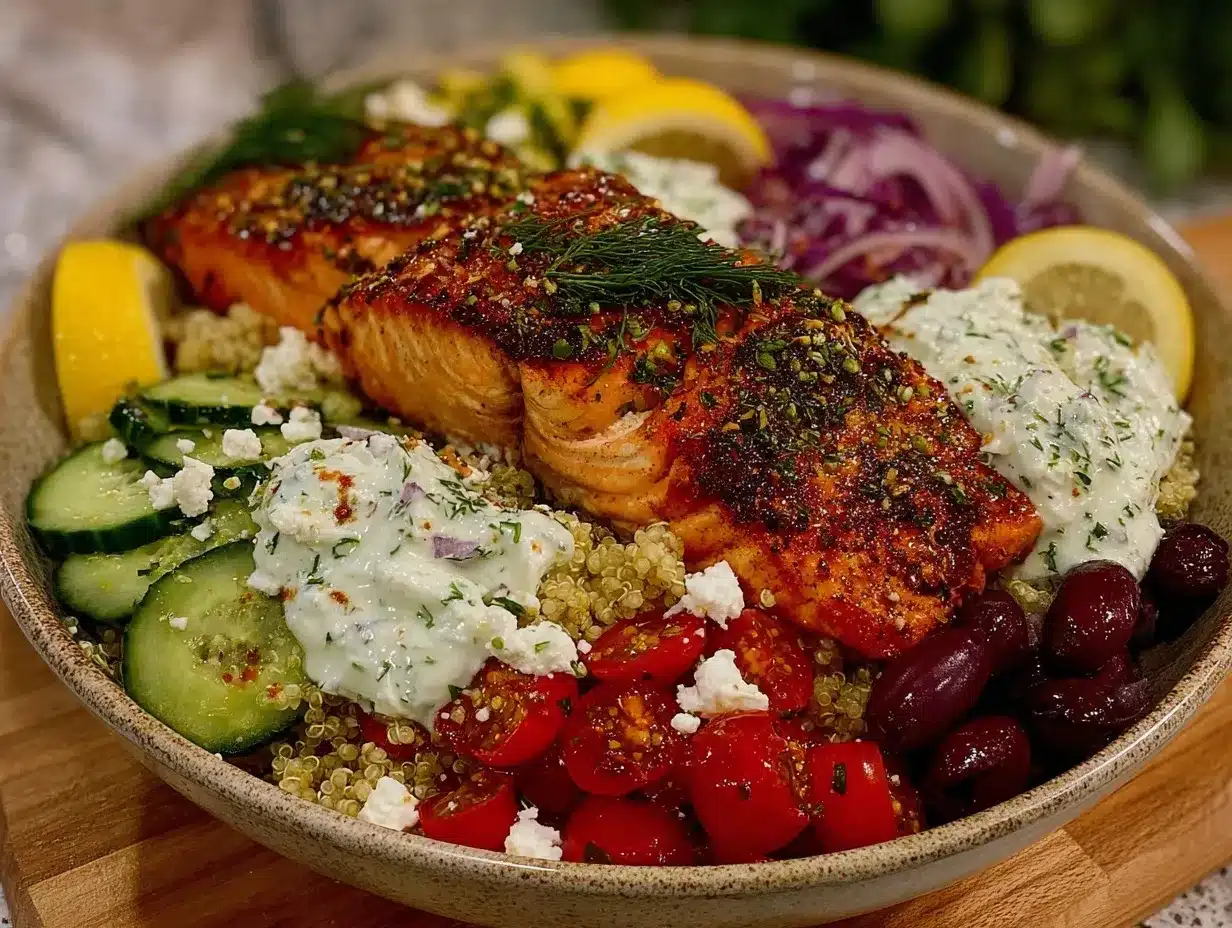
- Prepare the Quinoa: Rinse 1 cup (170g) of quinoa under cold water for about 30 seconds to remove bitterness. Combine quinoa with 2 cups (480ml) water in a medium saucepan. Bring to a boil, then reduce to a simmer and cover. Cook for 15 minutes or until water is absorbed and quinoa is fluffy. Remove from heat and let sit covered for 5 minutes, then fluff with a fork.
- Make the Tzatziki: While quinoa cooks, grate ½ cucumber (about ½ cup) finely using a grater or microplane. Place grated cucumber in a clean towel and squeeze out excess moisture (this step is key to avoid watery tzatziki). In a mixing bowl, combine ½ cup (120g) Greek yogurt, grated cucumber, 1 minced garlic clove, juice and zest of half a lemon, and 2 tablespoons chopped fresh dill. Season with salt and pepper to taste. Stir well and refrigerate until ready to serve.
- Season and Cook Salmon: Pat salmon fillets dry with paper towels. Drizzle with 1 tablespoon olive oil, lemon juice from the remaining half lemon, salt, and pepper. Heat a non-stick skillet over medium-high heat. Place salmon skin-side down if skin is on. Cook for 4-5 minutes until the skin is crispy and the fish is opaque halfway up the sides. Flip and cook another 2-3 minutes until cooked through but still moist inside. Remove from heat and let rest.
- Prepare Salad Components: While salmon cooks, halve 1 cup cherry tomatoes, slice ¼ cup red onion thinly, and slice ¼ cup Kalamata olives if using. Toss these with the fluffed quinoa and drizzle with 1 tablespoon olive oil. Season lightly with salt and pepper.
- Assemble the Bowl: Divide quinoa salad between bowls. Place salmon fillet on top, then spoon a generous dollop of tzatziki over the salmon. Garnish with extra dill or lemon zest if you like.
Pro tip: Don’t skip squeezing the cucumber dry for tzatziki — watery sauce is a bummer. Also, resting the salmon a few minutes after cooking locks in moisture and helps the flavors settle.
Cooking Tips & Techniques
Getting this Healthy Calorie Deficit Greek Salmon Bowl just right is easier with a few tricks I’ve picked up along the way. For one, rinsing quinoa well is a must to avoid any bitterness — you can almost taste it if you skip this step.
When cooking salmon, medium-high heat is your friend. Too hot, and the outside burns before the inside cooks; too low, and you lose that beautiful crispy skin texture. Also, letting it rest post-cooking helps the juices redistribute, so it stays tender.
For the tzatziki, squeezing out excess cucumber water is crucial. I’ve made it without this step once or twice, and it diluted the sauce and made the bowl soggy — not fun. Using fresh dill and real garlic instead of powders makes a noticeable difference in flavor.
Timing-wise, start the quinoa first since it takes the longest. While it’s cooking, prep your veggies and tzatziki. Then cook the salmon last so it’s warm and fresh. If you want to save time, quinoa can be cooked ahead and stored refrigerated for a couple of days.
One common mistake is under-seasoning. Don’t be shy with salt and lemon – they brighten and bring everything together. I often taste as I go, especially with the tzatziki, to get the balance just right.
Variations & Adaptations
This bowl is flexible and easy to customize based on what you have or your dietary needs. Here are a few ideas I’ve tried or recommend:
- Protein Swap: Replace salmon with grilled chicken breast, shrimp, or even pan-fried tofu for a vegetarian-friendly option.
- Grain Alternatives: Use brown rice, couscous, or even cauliflower rice instead of quinoa for different textures and flavors.
- Dairy-Free Tzatziki: Swap Greek yogurt for coconut or almond milk-based yogurt. Add a touch of olive oil to boost creaminess.
- Spice It Up: Add a pinch of smoked paprika or cayenne to the salmon seasoning for a subtle smoky heat.
- Seasonal Veggies: In warmer months, toss in fresh peas or roasted peppers; in cooler months, roasted butternut squash or sautéed greens work beautifully.
Once, I swapped quinoa for a kale and quinoa salad base from another favorite recipe on the site, and it gave the bowl an extra layer of earthiness that was fantastic. Play around and see what clicks with your taste buds.
Serving & Storage Suggestions
This Greek Salmon Bowl is best served warm or at room temperature. The contrast between the warm salmon and quinoa with the cool, creamy tzatziki is part of what makes it so enjoyable. For a dinner party, garnish with fresh herbs and lemon wedges to make it feel a bit more special.
Pair it with a crisp green salad or roasted vegetables to round out the meal. A chilled glass of white wine or sparkling water with lemon complements the fresh flavors nicely.
Leftovers keep well in the fridge for up to 2 days. Store the salmon and quinoa in an airtight container, and keep the tzatziki separate if possible to maintain its texture. When reheating, warm the quinoa and salmon gently in the microwave or oven (covered to avoid drying out) and add fresh tzatziki on top afterward.
Flavors tend to meld and deepen overnight, making leftovers surprisingly delicious. Just be sure to keep the tzatziki chilled until serving.
Nutritional Information & Benefits
This bowl strikes a nice balance of protein, healthy fats, and complex carbs — perfect for anyone looking to maintain a calorie deficit without feeling hungry.
| Nutrient | Per Serving |
|---|---|
| Calories | Approx. 450 kcal |
| Protein | About 35g |
| Carbohydrates | 35g (mostly from quinoa and veggies) |
| Fat | 15g (mostly from olive oil and salmon) |
| Fiber | 5g |
Salmon is rich in omega-3 fatty acids, which support heart and brain health. Quinoa provides all nine essential amino acids, making it a complete plant protein. Greek yogurt adds probiotics for gut health, while fresh veggies contribute vitamins and antioxidants.
This meal is naturally gluten-free and can easily be adapted for dairy-free diets. It’s a smart choice for those wanting nutrient-dense food that supports weight management without sacrificing taste.
Conclusion
This Healthy Calorie Deficit Greek Salmon Bowl with Tzatziki and Quinoa is one of those rare recipes that feels like a treat but fits right into a smart eating plan. It’s flexible, approachable, and packed with flavors that don’t just fill you up—they satisfy.
Feel free to tweak the ingredients to suit your palate or pantry, whether that means swapping in your favorite veggies or trying a different protein. For me, it’s become a quiet favorite because it’s simple, nourishing, and, honestly, a little surprising how much folks enjoy it.
If you give it a try, I’d love to hear how you make it your own. Sharing those little personal touches makes cooking feel even more rewarding. Here’s to meals that bring good food and good feelings to your table.
Frequently Asked Questions
Can I use frozen salmon for this recipe?
Yes, frozen salmon works well. Just thaw it completely and pat dry before cooking to avoid excess moisture.
Is quinoa necessary, or can I use another grain?
You can substitute quinoa with brown rice, couscous, or cauliflower rice depending on your preference and dietary needs.
How long can I store leftovers?
Store leftovers in airtight containers in the fridge for up to 2 days. Keep tzatziki separate for best texture.
Can I meal prep this bowl for the week?
Absolutely. Cook quinoa and salmon ahead, prepare tzatziki, and assemble bowls as needed. Keep components separate until serving.
What if I don’t like dill?
Fresh dill adds signature flavor, but you can substitute with fresh parsley or mint for a different but still tasty twist.
Pin This Recipe!
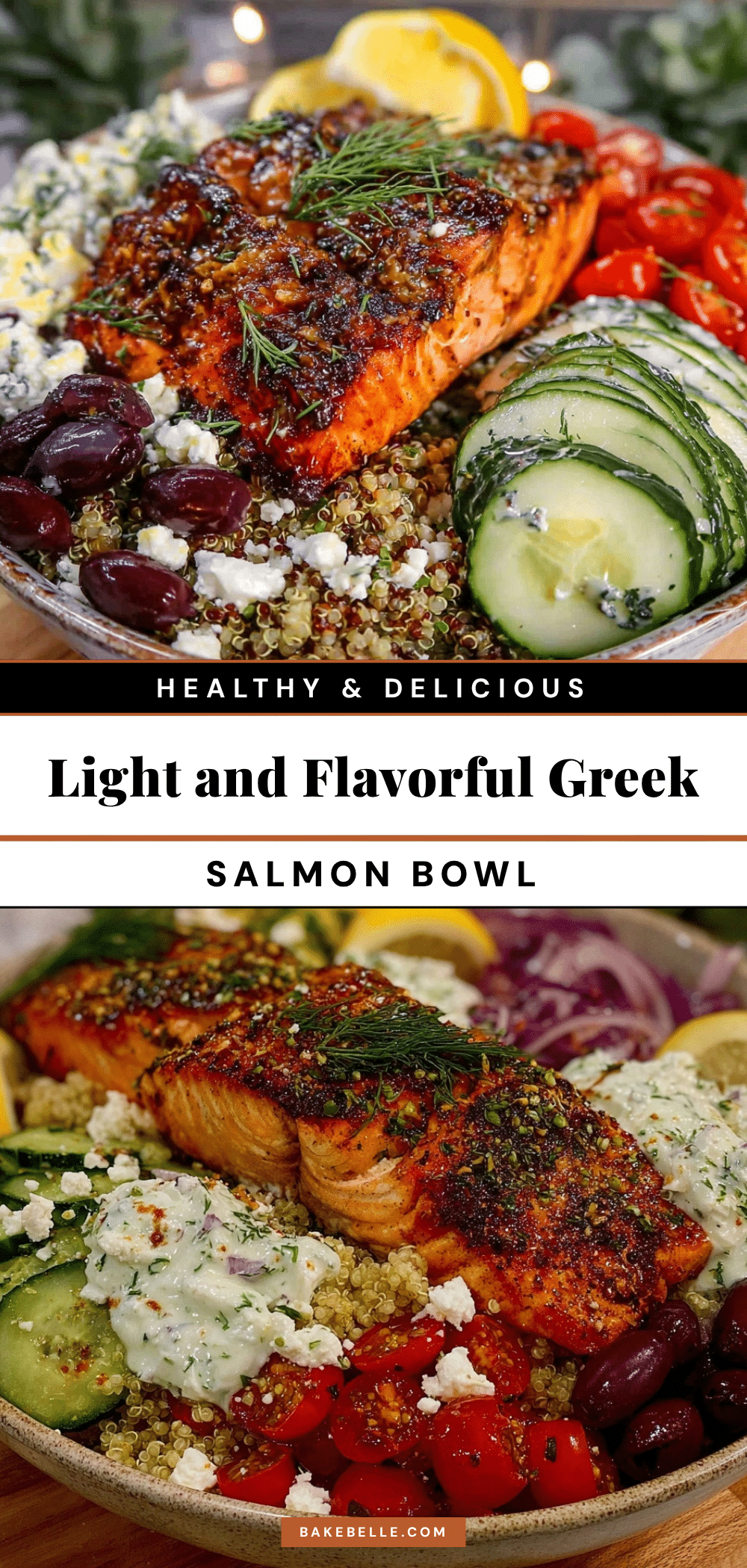
Healthy Calorie Deficit Greek Salmon Bowl Recipe with Tzatziki and Quinoa for Easy Weight Loss
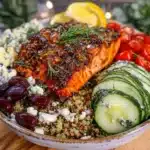
A nourishing and flavorful Greek salmon bowl featuring grilled salmon, fresh tzatziki, and fluffy quinoa, perfect for a calorie deficit lifestyle and quick weeknight meals.
- Prep Time: 10 minutes
- Cook Time: 20 minutes
- Total Time: 30 minutes
- Yield: 2 servings 1x
- Category: Main Course
- Cuisine: Greek
Ingredients
- Salmon fillets, about 6 ounces (170g) per serving, skin-on or skinless
- 1 cup (170g) uncooked quinoa, rinsed well
- ½ cup (120g) Greek yogurt, full-fat or low-fat
- ½ medium cucumber, finely diced or grated, seeded
- 2 tablespoons fresh dill, chopped
- 1 clove garlic, minced
- Juice and zest of 1 lemon
- 2 tablespoons olive oil
- ¼ cup Kalamata olives, pitted and sliced (optional)
- 1 cup cherry tomatoes, halved
- ¼ cup red onion, thinly sliced (optional)
- Salt and pepper to taste
Instructions
- Rinse 1 cup (170g) quinoa under cold water for about 30 seconds to remove bitterness. Combine quinoa with 2 cups (480ml) water in a medium saucepan. Bring to a boil, then reduce to a simmer and cover. Cook for 15 minutes or until water is absorbed and quinoa is fluffy. Remove from heat and let sit covered for 5 minutes, then fluff with a fork.
- While quinoa cooks, grate ½ cucumber finely. Place grated cucumber in a clean towel and squeeze out excess moisture. In a mixing bowl, combine ½ cup (120g) Greek yogurt, grated cucumber, 1 minced garlic clove, juice and zest of half a lemon, and 2 tablespoons chopped fresh dill. Season with salt and pepper to taste. Stir well and refrigerate until ready to serve.
- Pat salmon fillets dry with paper towels. Drizzle with 1 tablespoon olive oil, lemon juice from the remaining half lemon, salt, and pepper. Heat a non-stick skillet over medium-high heat. Place salmon skin-side down if skin is on. Cook for 4-5 minutes until the skin is crispy and the fish is opaque halfway up the sides. Flip and cook another 2-3 minutes until cooked through but still moist inside. Remove from heat and let rest.
- While salmon cooks, halve 1 cup cherry tomatoes, slice ¼ cup red onion thinly, and slice ¼ cup Kalamata olives if using. Toss these with the fluffed quinoa and drizzle with 1 tablespoon olive oil. Season lightly with salt and pepper.
- Divide quinoa salad between bowls. Place salmon fillet on top, then spoon a generous dollop of tzatziki over the salmon. Garnish with extra dill or lemon zest if desired.
Notes
Squeeze excess water from grated cucumber to avoid watery tzatziki. Let salmon rest after cooking to lock in moisture. Rinse quinoa well to remove bitterness. Season generously with salt and lemon juice for best flavor. Quinoa and salmon can be cooked ahead for meal prep. Keep tzatziki separate when storing leftovers to maintain texture.
Nutrition
- Serving Size: 1 bowl (1 salmon fil
- Calories: 450
- Fat: 15
- Carbohydrates: 35
- Fiber: 5
- Protein: 35
Keywords: Greek salmon bowl, healthy salmon recipe, calorie deficit meal, tzatziki sauce, quinoa bowl, weight loss recipe, quick dinner, gluten-free, dairy-free option