My neighbor, a retired schoolteacher named Carmen, watched me hauling a gigantic box of cherry tomatoes from the farmer’s market. She didn’t say anything at first, just leaned against her porch railing with a knowing smile. “You’re not going to make a salad with all of those, are you?” she finally asked. I laughed and admitted I had grand plans but zero direction. She nodded, disappeared inside, and came back holding a well-worn, oil-stained index card. “This is what you do,” she said, handing it over. “It’s the only way I’ve ever been able to keep up with August.”
I honestly thought she was just giving me a simple roasting recipe—something quick to toss with pasta for a Tuesday night. But the instructions were different. The oven was set to a whisper of a temperature, the tomatoes were halved and nestled in a single layer, and the garlic cloves were kept whole. It felt almost too simple to be good. But I tried it, and let me tell you, the first time that sauce came out of the oven, I just stood there with the oven door open, letting the aroma wash over me. It was like summer had been distilled into a single, concentrated spoonful.
Maybe you’ve been there—staring down a mountain of beautiful, ripe tomatoes and feeling a little overwhelmed. You know that feeling when you want to preserve the season but don’t want to spend hours over a hot stove? This sauce is the answer. It’s a set-it-and-forget-it kind of recipe that turns a simple ingredient into pure gold. The whole process felt a bit magical, and the fact that it freezes perfectly means I get to taste August in the middle of a dreary January. That’s why this recipe has become my go-to, year after year.
Why You’ll Love This Recipe
This isn’t just another tomato sauce recipe. It’s a technique that changes everything. After years of testing, I can confidently say this is the easiest, most flavorful, and most reliable way to handle a glut of cherry tomatoes. Here’s what makes it a total game-changer:
- Incredibly Easy: The oven does all the work. You spend about 15 minutes prepping, and then the slow roasting takes care of the rest. It’s perfect for a busy weekend when you want to stock your freezer without being tied to the kitchen.
- Unbelievably Concentrated Flavor: Slow-roasting at a low temperature intensifies the natural sweetness of the tomatoes. You get a jammy, rich, and complex flavor that no stovetop sauce can match. It’s the kind of sauce that makes you close your eyes after the first bite.
- Simple, Wholesome Ingredients: You only need cherry tomatoes, garlic, olive oil, and herbs. No cans, no preservatives, no weird additives. Just pure, clean flavor from your kitchen.
- Perfect for Meal Prep: This sauce is a freezer hero. Make a big batch on the weekend, portion it out, and you have an instant base for pasta, pizza, soups, or stews. It’s like having a secret weapon in your freezer.
- Always a Crowd-Pleaser: Everyone loves a good tomato sauce, and this one is so deeply flavorful that even picky eaters ask for seconds. It’s comfort food reimagined—healthier, faster, but with the same soul-soothing satisfaction.
What makes this recipe different from the rest is the technique. The low-and-slow method is the secret. It’s not about sautéing or simmering; it’s about coaxing the natural sugars out of the tomatoes until they caramelize into a savory-sweet jam. This isn’t just another version of tomato sauce—it’s your best version.
What Ingredients You Will Need
This recipe uses simple, wholesome ingredients to deliver bold flavor and satisfying texture without the fuss. Most of these are pantry staples or easily found at your local market. Here’s what you’ll need:
For the Sauce
- 3 pounds cherry or grape tomatoes, halved (a mix of colors is beautiful, but red is classic)
- 6-8 cloves garlic, peeled and left whole (they become sweet and spreadable)
- 1/4 cup extra-virgin olive oil (I prefer a good quality one like California Olive Ranch for the best flavor)
- 1 teaspoon kosher salt, plus more to taste
- 1/2 teaspoon black pepper, freshly ground
- 1 tablespoon balsamic vinegar (optional, but adds a lovely depth)
- 2-3 sprigs fresh basil or thyme (or 1 teaspoon dried oregano)
- Pinch of red pepper flakes (optional, for a little heat)
Ingredient Selection Tips
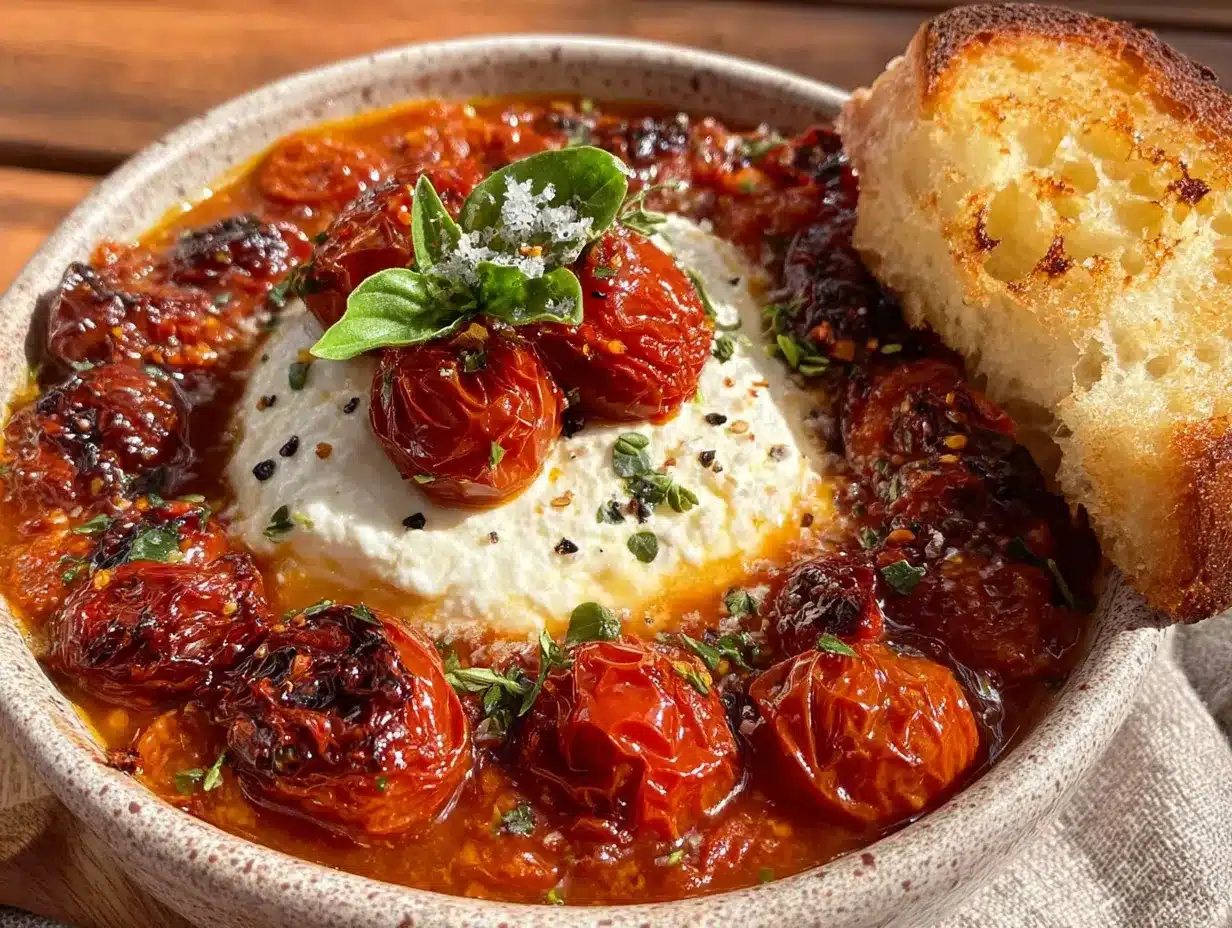
Look for cherry tomatoes that are firm and brightly colored. If they are a little soft, that’s fine—they’ll just cook down faster. For the garlic, larger cloves are easier to peel. I recommend using a good quality olive oil here because it’s a key flavor component. If you’re out of fresh herbs, dried oregano works perfectly. The balsamic vinegar is my secret weapon—it adds a subtle tang that brightens the whole sauce without tasting like vinegar.
Substitution Guidance
You can use any small tomato variety you have on hand. Roma tomatoes can be quartered instead of halved. For a low-sodium option, reduce the salt. If you are allergic to garlic, try roasting the tomatoes with a small shallot instead. The flavor will be different, but still delicious.
Equipment Needed
You don’t need a lot of fancy gadgets for this recipe, which is part of its charm. Here’s what you’ll need:
- Large baking sheet or rimmed sheet pan (A half-sheet pan is ideal. I’ve used a cheap one for years, but a heavy-duty aluminum pan distributes heat more evenly.)
- Parchment paper (for easy cleanup)
- Chef’s knife and cutting board
- Large mixing bowl
- Immersion blender or regular blender (for a smooth sauce, or a potato masher for a chunkier texture)
- Freezer-safe containers or zip-top bags (for storage)
- Measuring spoons
If you don’t have an immersion blender, you can let the sauce cool slightly and pulse it in a regular blender. Just be careful with the hot liquid—fill the blender only halfway and hold the lid down with a towel. For a chunkier sauce, simply mash the roasted tomatoes with a fork or potato masher right on the baking sheet.
Preparation Method
This method is incredibly straightforward, but a few little tricks make all the difference. Let’s walk through it step-by-step.
- Preheat your oven to 300°F (150°C). This low temperature is the key. It’s not hot enough to burn the tomatoes, but hot enough to slowly coax out their sweetness. Line a large baking sheet with parchment paper for easy cleanup.
- Prepare the tomatoes. Wash and dry your cherry tomatoes. Cut each one in half. This is the most time-consuming part, but you can put on a podcast and get into a rhythm. I like to cut them all first and then move on to the next step. Place the halved tomatoes in a large mixing bowl.
- Add the aromatics. Add the whole peeled garlic cloves, olive oil, salt, pepper, and red pepper flakes (if using) to the bowl with the tomatoes. Toss everything gently with your hands or a spatula until each tomato half is well coated. The garlic cloves will soften and sweeten as they roast, becoming almost like a paste.
- Arrange on the baking sheet. Pour the tomato mixture onto your prepared baking sheet. Spread them out into a single layer. This is important—if they overlap, they’ll steam instead of roast. Make sure the garlic cloves are tucked in among the tomatoes so they don’t burn. Nestle the fresh herb sprigs (basil or thyme) among the tomatoes.
- Roast slowly. Place the baking sheet in the preheated oven and roast for 2 to 2.5 hours. You’ll know it’s done when the tomatoes have shriveled, their edges are lightly caramelized, and the juices have thickened into a syrupy consistency. The garlic should be soft and golden. About halfway through, I like to give the pan a gentle shake to ensure even cooking.
- Add the balsamic vinegar (optional). During the last 15 minutes of roasting, drizzle the balsamic vinegar over the tomatoes. This step is optional, but I highly recommend it. The vinegar adds a beautiful acidity that balances the sweetness.
- Cool slightly. Remove the baking sheet from the oven and let it cool for about 10 minutes. Remove the herb sprigs (the leaves will have fallen off, which is fine).
- Blend to your desired consistency. For a smooth sauce, transfer the roasted tomatoes, garlic, and all the pan juices to a blender or use an immersion blender directly on the sheet pan. Pulse until smooth. For a chunkier, more rustic sauce, use a potato masher or fork to break up the tomatoes right on the pan. Taste and adjust seasoning with more salt or pepper if needed.
- Portion and store. Let the sauce cool completely to room temperature. Then, transfer it to freezer-safe containers or zip-top bags. I like to portion it into 1-cup and 2-cup amounts so I can grab exactly what I need for a recipe.
Cooking Tips & Techniques
I’ve made this sauce dozens of times, and I’ve learned a few things the hard way. Here are my best tips to ensure success every time.
- Don’t skip the halving step. I know it’s tempting to just toss whole cherry tomatoes in, but halving them allows the moisture to escape and the sugars to concentrate. Whole tomatoes will burst and release a lot of watery juice, which prevents proper caramelization.
- Use a rimmed baking sheet. There will be some juices released during roasting, and a rimmed sheet pan keeps everything contained. A flat cookie sheet will make a mess in your oven. Trust me on this one—I learned the hard way.
- Watch the garlic. Garlic can burn easily, even at 300°F. If the garlic cloves start to look too dark before the tomatoes are done, you can move them to a cooler spot on the pan or remove them early and add them back when blending. Burnt garlic will make the sauce bitter.
- Don’t overcrowd the pan. This is the most common mistake. If the tomatoes are piled on top of each other, they will steam and release too much liquid. You want them in a single, snug layer, but not overlapping. If you have more than 3 pounds of tomatoes, use two baking sheets.
- Let it cool completely before freezing. Putting hot sauce into a freezer container will create steam and ice crystals, which can affect the texture. Patience is key here. I usually make this in the evening and let it cool on the counter overnight before freezing.
Variations & Adaptations
This recipe is a fantastic base for so many different flavor profiles. Here are a few of my favorite ways to change it up.
- Herb-Infused Version: Before roasting, add a few sprigs of rosemary, oregano, or even a sprig of fresh sage. The herbs infuse the oil and tomatoes with a wonderful, aromatic flavor. Remove the woody stems before blending.
- Spicy Arrabbiata Style: Double or triple the red pepper flakes. You could also add a small dried chili pepper, like a chile de árbol, to the pan while roasting. This version is incredible on pasta with a little pecorino cheese.
- Roasted Vegetable Boost: Add a diced red bell pepper, a small chopped onion, or a handful of chopped carrots to the baking sheet along with the tomatoes. These vegetables will caramelize and add a natural sweetness and complexity to the sauce.
- Dairy-Free Creamy Sauce: After blending, stir in 1/4 cup of full-fat coconut milk or a dollop of cashew cream. This creates a luscious, creamy sauce that’s completely dairy-free. It’s amazing over roasted vegetables or as a pizza base.
- Smoky Version: Add 1/2 teaspoon of smoked paprika to the tomatoes before roasting. This gives the sauce a deep, smoky flavor that’s perfect for a hearty pasta or as a base for shakshuka.
My personal favorite variation is the roasted vegetable boost. I added a chopped carrot once when I had one leftover in the fridge, and the subtle sweetness it added was a total revelation. It’s now my go-to for a more rounded, hearty sauce.
Serving & Storage Suggestions
This sauce is incredibly versatile. Here’s how to make the most of it.
Serving: Serve the sauce warm, either straight from the oven or reheated on the stovetop. It’s fantastic tossed with your favorite pasta, spread on a pizza base, or spooned over grilled chicken or fish. For a simple dinner, I love it on toasted sourdough with a poached egg on top. The flavor is so concentrated that a little goes a long way.
Storage: Store the cooled sauce in an airtight container in the refrigerator for up to 5 days. The flavors actually continue to meld and deepen over time, so it’s even better the next day. For longer storage, this sauce freezes beautifully for up to 6 months.
Freezing Tips: Portion the sauce into freezer-safe containers or zip-top bags. If using bags, lay them flat in the freezer to save space. I like to freeze it in 1-cup portions in small mason jars, leaving about an inch of headspace for expansion. Thaw the sauce overnight in the refrigerator or on the counter for a few hours. Reheat gently on the stovetop or in the microwave.
Reheating: Reheat the sauce in a small saucepan over low heat, stirring occasionally. If it seems too thick after freezing, add a splash of pasta water or a little olive oil to loosen it up. The texture might be slightly more rustic after freezing, but the flavor remains incredible.
Nutritional Information & Benefits
This sauce is not only delicious but also packed with nutritional benefits. Here’s a quick overview for a 1-cup serving (approximately 240g):
- Calories: ~120
- Fat: 8g
- Carbohydrates: 12g
- Fiber: 3g
- Sugar: 8g (natural)
- Protein: 2g
- Sodium: ~400mg (varies with added salt)
- Vitamin A: 20% of the Daily Value
- Vitamin C: 25% of the Daily Value
Cherry tomatoes are an excellent source of lycopene, a powerful antioxidant that is better absorbed when cooked. The olive oil adds healthy monounsaturated fats, which also help with the absorption of fat-soluble vitamins. This sauce is naturally vegan, gluten-free, and dairy-free. The only potential allergen is the garlic, which is generally well-tolerated but can be omitted for a low-FODMAP diet.
I love that this recipe lets me enjoy a healthy, homemade sauce without any of the added sugars or preservatives found in store-bought jars. It’s a small but meaningful way to nourish my family with whole foods.
Conclusion
This slow-roasted cherry tomato sauce has become a staple in my kitchen for a reason. It’s the perfect way to capture the peak of summer and enjoy it all year long. The process is almost meditative—the slow roasting fills your home with an incredible aroma, and the result is a sauce that tastes like pure sunshine. It’s proof that sometimes the simplest techniques create the most extraordinary flavors.
I encourage you to make a big batch and make it your own. Add your favorite herbs, adjust the spice level, or throw in a few extra vegetables. This recipe is a canvas, and you are the artist. Don’t be afraid to experiment.
I truly believe this sauce will change the way you think about tomato sauce. It has for me. So grab a basket of cherry tomatoes, preheat your oven, and let the magic happen. Your future self—especially on a cold, rainy Tuesday night—will thank you.
Have you tried this recipe? I’d love to hear about your variations! Drop a comment below and let me know how it turned out. And if you loved it, please share this post with a friend who needs a little summer in their life.
Frequently Asked Questions
Can I use regular-sized tomatoes instead of cherry tomatoes?
Yes, you can! Roma or plum tomatoes work best because they have less water content. Just quarter them instead of halving, and you may need to add 15-20 minutes to the roasting time. Avoid large beefsteak tomatoes as they are too watery for this method.
Do I have to peel the garlic before roasting?
Yes, I recommend peeling the garlic cloves. Whole, peeled cloves will become soft and sweet, and they blend seamlessly into the sauce. If you leave the skins on, they will be difficult to remove after roasting, and you’ll lose that delicious roasted garlic flavor.
My sauce is too watery. What went wrong?
This usually happens if the tomatoes were overcrowded on the baking sheet or if they were not roasted long enough. Next time, make sure the tomatoes are in a single layer. If your sauce is already watery, you can pour it into a small saucepan and simmer it on the stovetop over medium-low heat for 10-15 minutes to reduce it.
Can I add onions to this recipe?
Absolutely! Adding a small, thinly sliced onion or a few shallots to the baking sheet is a great idea. They will caramelize beautifully and add a wonderful depth of flavor. Just make sure the onion pieces are small enough to cook through in the same time as the tomatoes.
How long does this sauce last in the freezer?
Properly stored in an airtight container or freezer bag, this sauce will maintain its best quality for up to 6 months. After that, it is still safe to eat but may lose some of its vibrant flavor and texture. Be sure to label your containers with the date so you know when you made it.
Pin This Recipe!
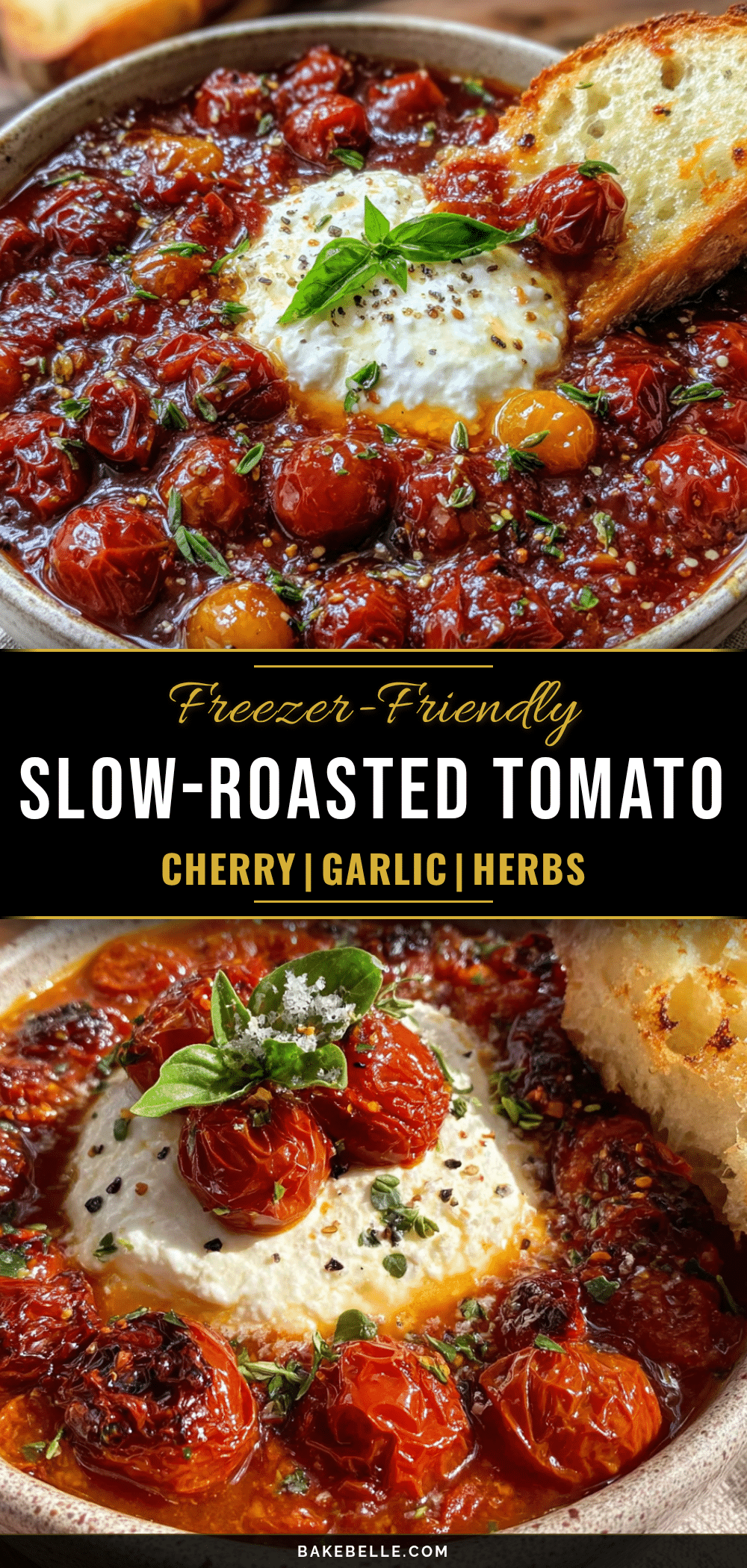
Easy Slow-Roasted Cherry Tomato Sauce (Freezer-Friendly)

This slow-roasted cherry tomato sauce is incredibly easy to make and packed with concentrated, sweet flavor. It’s a set-it-and-forget-it recipe that freezes perfectly, allowing you to enjoy the taste of summer all year long.
- Prep Time: 15 minutes
- Cook Time: 2 hours 30 minutes
- Total Time: 2 hours 45 minutes
- Yield: 4 servings 1x
- Category: Sauce
- Cuisine: Italian
Ingredients
- 3 pounds cherry or grape tomatoes, halved
- 6–8 cloves garlic, peeled and left whole
- 1/4 cup extra-virgin olive oil
- 1 teaspoon kosher salt, plus more to taste
- 1/2 teaspoon black pepper, freshly ground
- 1 tablespoon balsamic vinegar (optional)
- 2–3 sprigs fresh basil or thyme (or 1 teaspoon dried oregano)
- Pinch of red pepper flakes (optional)
Instructions
- Preheat your oven to 300°F (150°C). Line a large baking sheet with parchment paper.
- Wash and dry the cherry tomatoes. Cut each one in half. Place the halved tomatoes in a large mixing bowl.
- Add the whole peeled garlic cloves, olive oil, salt, pepper, and red pepper flakes (if using) to the bowl with the tomatoes. Toss gently until each tomato half is well coated.
- Pour the tomato mixture onto the prepared baking sheet and spread into a single layer. Tuck the garlic cloves in among the tomatoes and nestle the fresh herb sprigs among them.
- Roast for 2 to 2.5 hours, until the tomatoes are shriveled, edges are lightly caramelized, and the juices have thickened into a syrupy consistency. The garlic should be soft and golden. About halfway through, gently shake the pan for even cooking.
- During the last 15 minutes of roasting, drizzle the balsamic vinegar over the tomatoes (optional).
- Remove the baking sheet from the oven and let cool for about 10 minutes. Remove the herb sprigs.
- For a smooth sauce, transfer the roasted tomatoes, garlic, and all pan juices to a blender or use an immersion blender directly on the sheet pan. Pulse until smooth. For a chunkier sauce, use a potato masher or fork to break up the tomatoes right on the pan. Taste and adjust seasoning with more salt or pepper if needed.
- Let the sauce cool completely to room temperature. Transfer to freezer-safe containers or zip-top bags, portioning into 1-cup and 2-cup amounts.
Notes
Don’t skip halving the tomatoes; it allows moisture to escape and sugars to concentrate. Use a rimmed baking sheet to contain juices. Watch the garlic to prevent burning. Don’t overcrowd the pan; use two sheets if needed. Let sauce cool completely before freezing to prevent ice crystals.
Nutrition
- Serving Size: 1 cup (approximately
- Calories: 120
- Sugar: 8
- Sodium: 400
- Fat: 8
- Saturated Fat: 1
- Carbohydrates: 12
- Fiber: 3
- Protein: 2
Keywords: slow-roasted cherry tomato sauce, freezer-friendly tomato sauce, easy tomato sauce, homemade tomato sauce, cherry tomato recipe