There used to be a tiny Italian place tucked behind a laundromat on the west side of town that made a butternut squash lasagna that I still dream about. When they closed without warning—I pulled up one Tuesday to find a “For Lease” sign in the window—I actually stood there for a minute, staring. That sounds dramatic, I know. But that lasagna was the kind of dish you’d cancel plans for.
After twelve tries—twelve, let me tell you—I finally got it. The first few attempts were disasters. Too watery. Too sweet. The noodles slid around like they were trying to escape. But somewhere around attempt number seven, I stopped trying to copy the restaurant and started making something that was mine. And honestly? This version is better. It’s easier, too, which matters when you’re staring down a Wednesday night and everyone’s hungry.
The secret is the sage brown butter. That nutty, herbaceous, slightly-toasted butter sauce is what ties the whole thing together. Without it, you just have squash and cheese. With it? You have something that makes people close their eyes when they take a bite. Maybe you’ve been there—chasing a restaurant memory in your own kitchen, burning your fingers on hot pans, and finally landing on something that makes it all worth it. This is that recipe.
Why You’ll Love This Recipe
Let me be honest with you—I’ve tested this recipe on tired Tuesday nights, stressed-out Sunday afternoons, and one particularly chaotic Thursday when the dog got into the trash. It held up every single time. Here’s why this one’s different from every other butternut squash lasagna recipe floating around the internet.
- Quick & Easy: This comes together in about an hour, start to finish. No boiling noodles first—we use no-boil lasagna sheets. That alone saves you fifteen minutes and a dirty pot.
- Simple Ingredients: You won’t need to hunt down anything weird. Butternut squash, butter, sage, cheese, noodles. That’s basically it. Your grocery list is short, and your wallet stays happy.
- Perfect for Weeknights: This is comfort food that doesn’t demand your whole afternoon. Assemble it in twenty minutes, let the oven do the work, and you’ve got dinner that feels fancy without the fuss.
- Crowd-Pleaser: I’ve served this to picky kids, vegetarian friends, and my uncle who “doesn’t really like squash.” Empty plates all around. Every single time.
- Unbelievably Delicious: The sage brown butter creates this nutty, savory depth that makes the squash taste almost caramelized. It’s the kind of flavor that makes you wonder why you don’t cook with sage more often.
What makes this recipe different? It’s the technique. Most recipes have you roast the squash separately, then layer it in. That works, but it takes forever. Here, we slice the squash thin and layer it raw. It cooks perfectly in the oven, absorbing all that brown butter goodness along the way. Less work, more flavor.
This isn’t just another lasagna recipe. It’s the one you’ll pull out when you need something that feels special but doesn’t require a culinary degree. It’s comfort food reimagined—faster, simpler, but with the same soul-soothing satisfaction that makes you close your eyes after the first bite.
What Ingredients You Will Need
This recipe uses simple, wholesome ingredients to deliver big flavor without the fuss. Most of these are pantry staples, and the ones that aren’t are easy to find at any grocery store.
For the Sage Brown Butter
- 1/2 cup (1 stick) unsalted butter — I use Kerrygold here. The higher fat content makes for a richer brown butter that browns more evenly. If you only have salted butter, just skip adding extra salt later.
- 12-15 fresh sage leaves — Fresh is non-negotiable here. Dried sage just won’t give you that same aromatic, slightly peppery flavor. Look for leaves that are bright green and fragrant.
For the Butternut Squash Filling
- 1 medium butternut squash (about 2 pounds) — You want one that feels heavy for its size and has firm, unblemished skin. No need to peel it if you’re using the shortcut method I’ll share below.
- 2 tablespoons olive oil — A good-quality extra virgin olive oil adds a fruity note that balances the richness of the brown butter.
- 1 teaspoon salt — I use fine sea salt. If you’re using kosher salt, you’ll want to use about 1.5 teaspoons.
- 1/2 teaspoon black pepper — Freshly ground is best, but pre-ground works in a pinch.
- 1/2 teaspoon nutmeg — Freshly grated if you have it, but pre-ground is fine. Nutmeg and squash are best friends.
For the Cheese Mixture
- 15 ounces ricotta cheese — Whole milk ricotta gives the creamiest result. Part-skim works too, but the texture won’t be quite as luxurious. I like Galbani or Whole Foods 365 brand.
- 1 large egg — This helps bind the ricotta so it doesn’t turn into a watery mess while baking.
- 1 cup grated Parmesan cheese — Buy a block and grate it yourself. The pre-shredded stuff has anti-caking agents that prevent it from melting smoothly. Trust me on this one.
- 2 cups shredded mozzarella cheese — Low-moisture, part-skim mozzarella works best here. It melts beautifully without making the lasagna greasy.
- 1/4 cup chopped fresh parsley — Optional, but adds a nice freshness that cuts through all that richness.
For the Lasagna
- 12 no-boil lasagna noodles — Barilla is my go-to. They hold up well and don’t get mushy. If you can only find the kind that needs boiling, cook them about 2 minutes less than the package says—they’ll finish cooking in the oven.
Equipment Needed
You don’t need a fancy kitchen to pull this off. Here’s what you’ll actually use:
- 9×13-inch baking dish — Glass or ceramic works best. Metal can work, but it conducts heat differently and might brown the edges too fast.
- Large skillet or saucepan — For making the sage brown butter. A light-colored pan helps you see when the butter is browning.
- Sharp chef’s knife — Butternut squash is tough. A dull knife is dangerous here. If yours isn’t sharp, consider buying pre-cut squash.
- Vegetable peeler — Only if you’re peeling the squash. I have a favorite OXO one that’s never let me down.
- Mixing bowls — One medium, one small. Nothing fancy needed.
- Measuring cups and spoons — For the butter, cheese, and seasonings.
- Aluminum foil — For covering the lasagna while it bakes. Don’t skip this—it keeps the noodles from drying out.
Budget-friendly tip: If you don’t have a 9×13 dish, you can use two 8×8 dishes and make two smaller lasagnas. Freeze one for later—future you will be very grateful.
Preparation Method
Alright, let’s get cooking. I’ve broken this down into steps that make sense, even on a busy weeknight.
- Preheat your oven to 375°F. Get this going first so it’s ready when you are. Position the rack in the middle of the oven.
- Prepare the butternut squash. Here’s my shortcut: Cut the squash in half lengthwise (carefully—those things are tough). Scoop out the seeds. Rub the cut sides with olive oil, salt, and pepper. Place cut-side down on a baking sheet lined with parchment paper. Roast for 25-30 minutes, until a fork slides in easily. Let it cool until you can handle it, then scoop the flesh into a bowl and mash it roughly with a fork. You want some texture, not baby food. (If you’re really pressed for time, buy pre-cut butternut squash cubes and roast them for 20 minutes.)
- Make the sage brown butter. While the squash roasts, melt the butter in a light-colored skillet over medium heat. Add the sage leaves. Cook, swirling the pan occasionally, until the butter turns golden brown and smells nutty—about 5-7 minutes. The sage leaves will get crispy and dark. Watch carefully; brown butter can go from perfect to burnt in seconds. Remove from heat and set aside. The sage leaves will continue crisping as they cool.
- Mix the cheese filling. In a medium bowl, combine the ricotta, egg, half the Parmesan (about 1/2 cup), and the chopped parsley. Add a pinch of salt and pepper. Stir until smooth. Taste it—it should be creamy and savory, not bland.
- Assemble the lasagna. Spread a thin layer of the brown butter (about 2 tablespoons) on the bottom of your 9×13 dish. This prevents sticking and adds flavor right from the start. Layer in this order:
- 4 lasagna noodles (they’ll expand as they cook, so leave a tiny gap between them)
- 1/3 of the mashed squash, spread evenly
- 1/3 of the ricotta mixture, dolloped and spread
- 1/3 of the mozzarella
- Drizzle with brown butter (about 2 tablespoons)
- Repeat two more times
- Finish with a final layer of noodles, remaining brown butter, remaining Parmesan, and any leftover mozzarella
- Bake covered. Cover the dish tightly with foil. Bake for 30 minutes. The foil traps steam, which helps the no-boil noodles cook through without drying out.
- Bake uncovered. Remove the foil and bake for another 15-20 minutes, until the top is golden and bubbly. The edges should be slightly crispy, and the cheese should be melted and slightly browned in spots.
- Rest before serving. This is the hardest part. Let the lasagna rest for 10-15 minutes before slicing. If you cut into it immediately, it’ll turn into a soupy mess. Those few minutes let everything set up so you get clean, beautiful slices.
Cooking Tips & Techniques
I’ve made this recipe at least thirty times now, and I’ve learned a few things the hard way. Here’s what I wish someone had told me.
Don’t rush the brown butter. I know you’re hungry, but brown butter is one of those things that demands patience. Keep the heat at medium, not high. Swirl the pan constantly. The moment you see golden specks forming at the bottom and smell that nutty aroma, pull it off the heat. I’ve burned more batches than I care to admit because I walked away to answer my phone.
Season as you go. A common mistake is undersalting the squash or the ricotta mixture. If each layer is properly seasoned, the final dish will taste balanced. If you wait until the end, you’ll end up with a bland lasagna that no amount of salt can fix.
Watch your noodle coverage. No-boil noodles expand as they cook, so they don’t need to touch each other. But if you leave big gaps, you’ll end up with empty spots where the filling bubbles through. I overlap mine just slightly—like shingles on a roof.
Let it rest, seriously. I know I said this already, but I’m saying it again because I’ve ruined three lasagnas by being impatient. The resting time isn’t optional. It’s when the starches in the noodles absorb the excess moisture and everything firms up. Slice too soon and you’ll be eating lasagna soup.
Make extra brown butter. I always make a little more than I need. Drizzle it over the finished lasagna just before serving. It adds a final hit of that nutty, sage-y flavor that makes people ask what your secret is.
Variations & Adaptations
This recipe is forgiving. Here are some ways to make it your own.
Vegetarian Version: It’s already vegetarian, but if you want to add more vegetables, try layering in some sautéed spinach or kale between the squash and ricotta. The bitterness of the greens balances the sweetness of the squash beautifully.
Gluten-Free Option: Use gluten-free no-boil lasagna noodles. I’ve had good luck with the Tinkyada brand. They cook up a little differently—slightly firmer—so you might need to add an extra tablespoon of brown butter to keep things moist.
Dairy-Free Adaptation: This one’s trickier, but doable. Use a high-quality dairy-free butter for the brown butter (Miyoko’s works well). Substitute the ricotta with a cashew-based ricotta (easy to make at home—soak cashews, blend with lemon juice and salt). Use dairy-free mozzarella shreds, though be warned they don’t melt quite the same way.
Add Some Protein: If you want to make this a heartier meal, add a layer of cooked Italian sausage or shredded rotisserie chicken between the squash and ricotta. I’ve done this for my meat-loving family members, and they devour it.
Spice It Up: Add a pinch of red pepper flakes to the brown butter while it cooks. The heat cuts through the richness and adds a lovely warmth. I started doing this after a friend suggested it, and honestly, I can’t go back.
Serving & Storage Suggestions
This lasagna is beautiful on its own, but here’s how to make it a full meal.
Serving Temperature: Serve warm, not piping hot. Let it rest those 10-15 minutes, then slice and serve. A simple green salad with a lemony vinaigrette is the perfect side—the acidity cuts through the richness of the lasagna.
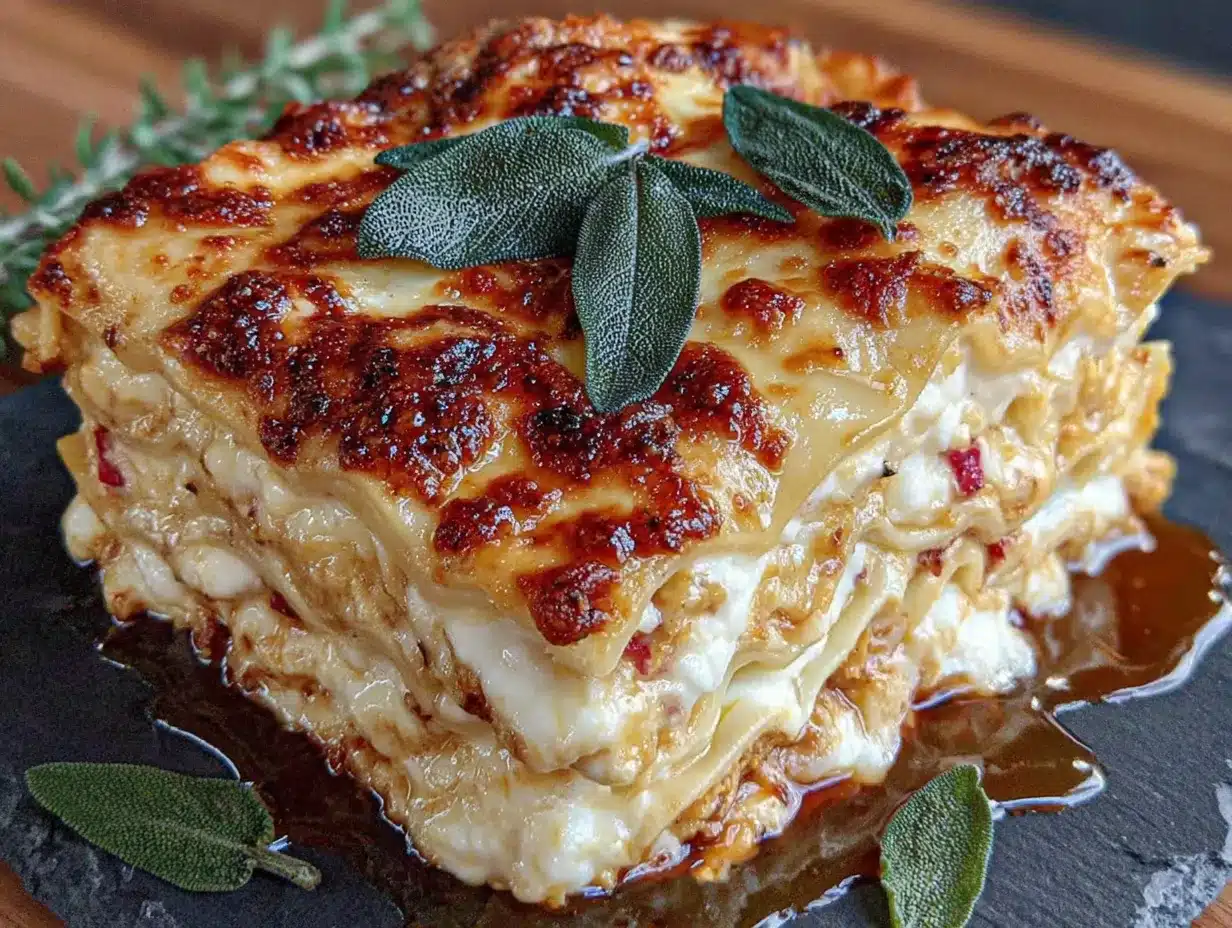
Presentation: Spoon a little extra brown butter over each slice before serving. Crumble a few of those crispy sage leaves on top. It looks impressive, and it tastes even better.
Storage: Leftovers keep beautifully. Store in an airtight container in the refrigerator for up to 4 days. The flavors actually get better as they meld together overnight.
Freezing: This lasagna freezes like a dream. Assemble it completely, but don’t bake it. Cover tightly with plastic wrap, then foil. Freeze for up to 3 months. When you’re ready to bake, thaw overnight in the fridge, then bake as directed. You may need to add 10-15 minutes to the covered baking time since it’s starting from cold.
Reheating: Individual slices reheat beautifully in the microwave (about 2 minutes on medium power). For larger portions, reheat in a 350°F oven, covered, for about 20 minutes. Add a splash of milk or cream if it seems dry.
Nutritional Information & Benefits
Let’s be real—this is indulgent food. But it also has some redeeming qualities.
| Nutrient | Per Serving (1/8 of recipe) |
|---|---|
| Calories | 485 |
| Total Fat | 28g |
| Saturated Fat | 16g |
| Cholesterol | 95mg |
| Sodium | 720mg |
| Total Carbohydrates | 38g |
| Dietary Fiber | 4g |
| Sugars | 6g |
| Protein | 22g |
| Vitamin A | 180% DV |
| Vitamin C | 25% DV |
| Calcium | 45% DV |
Butternut squash is packed with vitamin A (great for your eyes and immune system) and fiber (keeps you full). The sage in the brown butter isn’t just for flavor—it’s also known for its anti-inflammatory properties. And hey, you’re getting protein and calcium from all that cheese. It’s comfort food that actually has some nutritional merit.
If you’re watching your sodium, you can reduce the salt in the ricotta mixture and use low-sodium cheeses. The flavor will still be there—it’ll just be a little more subtle.
Conclusion
This butternut squash lasagna with sage brown butter is the recipe I turn to when I need something that feels special but doesn’t require a whole day in the kitchen. It’s the dish I bring to potlucks (and always come home with an empty dish). It’s the meal I make when I want to impress someone without looking like I’m trying too hard.
Honestly, it’s become more than just a recipe to me. It’s the thing I make when I’m chasing that memory of that little Italian place behind the laundromat. And you know what? This version is better. It’s mine. And now it can be yours too.
Try it this week. Customize it—add some spinach, throw in some sausage, go heavy on the sage. Make it your own. And when you do, come back and tell me about it. I’d love to hear how it turned out, what you changed, and whether it made someone at your table close their eyes after that first bite.
Happy cooking, friend.
Frequently Asked Questions
Can I use pre-cut butternut squash from the store?
Absolutely. It saves time and effort. Just roast the cubes for about 20 minutes at 375°F until tender, then mash them. It won’t be quite as smooth as roasting a whole squash, but it works perfectly fine for a busy weeknight.
Do I really need to use no-boil noodles?
No, but they make life easier. If you only have regular lasagna noodles, boil them for about 2 minutes less than the package directions say. They’ll finish cooking in the oven. Just make sure they’re al dente—mushy noodles will fall apart in the lasagna.
Can I make this ahead of time?
Yes! Assemble the lasagna completely the night before, cover it, and refrigerate. When you’re ready to bake, add about 10 minutes to the covered baking time since it’s starting from cold. You can also freeze it unbaked for up to 3 months.
Why did my lasagna turn out watery?
This usually happens for one of two reasons: the squash had too much moisture, or the ricotta wasn’t drained properly. To fix this, make sure you roast the squash until it’s tender but not wet. If your ricotta seems watery, drain it in a fine-mesh strainer for 30 minutes before mixing.
Can I use dried sage instead of fresh?
You can, but the flavor won’t be the same. Fresh sage has a delicate, peppery flavor that becomes nutty and crispy when fried in butter. Dried sage is more intense and can taste a bit dusty. If you must use dried, use about 1 teaspoon and add it to the butter after it’s browned.
Pin This Recipe!
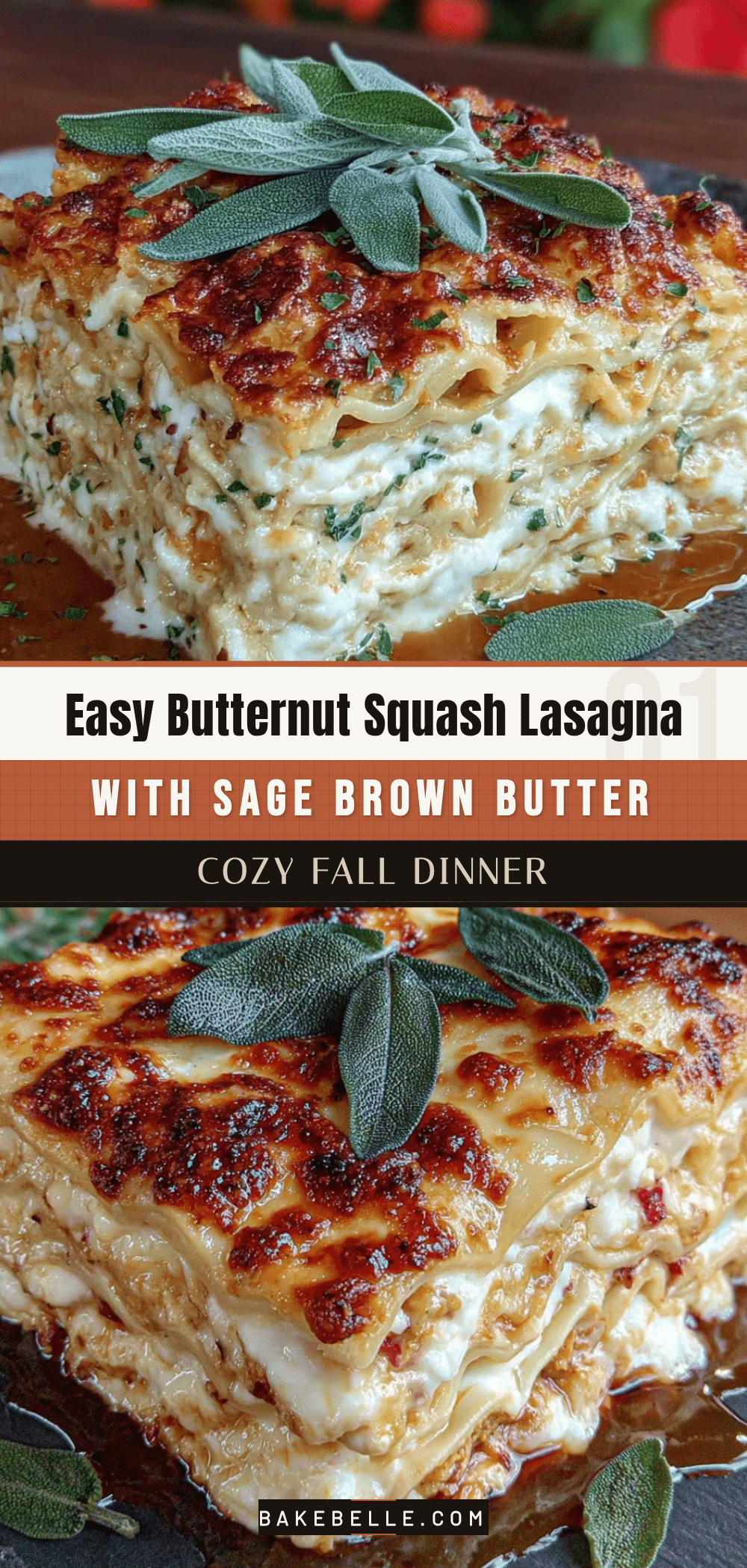
Easy Butternut Squash Lasagna with Sage Brown Butter
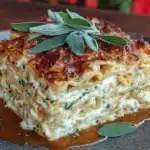
A quick and easy butternut squash lasagna with sage brown butter that comes together in about an hour. No-boil noodles and a simple technique make this comfort food perfect for weeknights.
- Prep Time: 20 minutes
- Cook Time: 45 minutes
- Total Time: 1 hour 5 minutes
- Yield: 8 servings 1x
- Category: Main Course
- Cuisine: Italian
Ingredients
- 1/2 cup (1 stick) unsalted butter
- 12–15 fresh sage leaves
- 1 medium butternut squash (about 2 pounds)
- 2 tablespoons olive oil
- 1 teaspoon fine sea salt
- 1/2 teaspoon black pepper
- 1/2 teaspoon nutmeg
- 15 ounces whole milk ricotta cheese
- 1 large egg
- 1 cup grated Parmesan cheese
- 2 cups shredded low-moisture part-skim mozzarella cheese
- 1/4 cup chopped fresh parsley (optional)
- 12 no-boil lasagna noodles
Instructions
- Preheat your oven to 375°F. Position the rack in the middle of the oven.
- Prepare the butternut squash: Cut the squash in half lengthwise, scoop out the seeds. Rub the cut sides with olive oil, salt, and pepper. Place cut-side down on a parchment-lined baking sheet. Roast for 25-30 minutes until tender. Let cool, then scoop the flesh into a bowl and mash roughly with a fork.
- Make the sage brown butter: While the squash roasts, melt the butter in a light-colored skillet over medium heat. Add the sage leaves. Cook, swirling occasionally, until the butter turns golden brown and smells nutty, about 5-7 minutes. Remove from heat and set aside.
- Mix the cheese filling: In a medium bowl, combine the ricotta, egg, half the Parmesan (about 1/2 cup), and the chopped parsley. Add a pinch of salt and pepper. Stir until smooth.
- Assemble the lasagna: Spread a thin layer of brown butter (about 2 tablespoons) on the bottom of a 9×13-inch baking dish. Layer in this order: 4 lasagna noodles, 1/3 of the mashed squash, 1/3 of the ricotta mixture, 1/3 of the mozzarella, and drizzle with brown butter (about 2 tablespoons). Repeat two more times. Finish with a final layer of noodles, remaining brown butter, remaining Parmesan, and any leftover mozzarella.
- Bake covered: Cover the dish tightly with foil. Bake for 30 minutes.
- Bake uncovered: Remove the foil and bake for another 15-20 minutes, until the top is golden and bubbly.
- Rest before serving: Let the lasagna rest for 10-15 minutes before slicing.
Notes
Don’t rush the brown butter; watch carefully as it can burn quickly. Season each layer as you go. Let the lasagna rest before slicing to avoid a soupy mess. Make extra brown butter to drizzle over the finished dish.
Nutrition
- Serving Size: 1/8 of recipe
- Calories: 485
- Sugar: 6
- Sodium: 720
- Fat: 28
- Saturated Fat: 16
- Carbohydrates: 38
- Fiber: 4
- Protein: 22
Keywords: butternut squash lasagna, sage brown butter, easy lasagna, vegetarian lasagna, fall recipe, comfort food